Spontaneous Epiphanies 

I knew I wanted to write novels, but I could not finish what I started.

The closer I got, the more ways I'd find to screw it up.

Steven Pressfield, author, The Legend of Baggar Vance


All my life, I have adhered to the belief that there are two types of creatives in the world: those that work by perspiration and those that work by inspiration.  Steven Pressfield, author of The War of Art, might define it as those who put their butts in a chair and those who don’t.

Since I have the attention span of a gnat, I have always lived in the “inspiration” category of creatives.  I once read that the Creator has assignments, and if we pass on a creative suggestion, it will get passed on the next, perhaps more willing, participant in the co-creation of a work. 

Somehow I found that comforting.

So for mostly fifty plus years, I simply observed the world and waited for a story or scene to unfold before me filled with human goodness or inspiration and then composed or written to capture that moment. I just waited patiently for the muse to direct my path. And that worked for years until a vague sense of dissatisfaction began to creep in.

Perhaps in a desire to see if I could persevere in something…anything…I started this blog.  For almost 100 weeks, with some exceptions, I have persisted.  During that time, I quit every week, I composed farewell letters, and I covered my ears and sang loudly to avoid those 3 am creative assignments.

But I showed up.

And then a funny thing happened.  I started showing up for the novel that haunted me all these years, and I am realizing that now my focus now needs to be on completing that work as it moves from its birth to its development.

So for awhile anyway, Tuesday Epiphanies will morph into Spontaneous Epiphanies… coming with their own time table, which will probably be very sporadic.. I figured out I needed to free up space in my busy, easily distracted mind to fully embrace this novel until it is polished and complete. The characters deserve my full attention, and I know they will let me know when their story is ready to be shared. I have come to love them deeply in this journey, and they feel like old friends now.

During these last two years, I have been humbled and lifted up by your support and encouragement.  I have felt you with me every step of the journey, and every time I was ready to throw in the towel, one of you would respond in a kind way to a post, and I thought to myself…okay…one more…

You have blessed me beyond measure, and I will continue to hold you close to my heart.

I am leaving you with the prologue to the novel, Water Skeeters, which opens on a trail in the North Cascades of Washington State.  Rachel Colburn and Emma Love will meet in that wilderness, and Rachel will emerge on the same trail a few days later a transformed woman.

Water Skeeters - Prologue


Can you hear the humming?


The soft breeze is thick with the searching appetite of mosquitoes and the laser scope scent vision of deerfly and yellow jacket.  Soaked in the sound, strangers have gathered here – their deepest fears submerged at the bottom of their backpacks, rolled into tight balls for easy transport - tucked as space fillers into the corners. They skate on the surface of their thoughts like water skeeters, poised on the tension between air and water, balanced on their teetering need for acceptance, yet desperate to remain unknown.

The path before them is steep - a ragged scar in the landscape that carves its way down through thick pine, huckleberry, and dry summer air.  They step out and down, their backpacks lightened by the counsel of the instructor - only one of everything needed: one cup, one bandana, one extra pair of shorts, one extra shirt, one extra jacket. They do not want to enter the wilderness overly encumbered, she announces.  And so they leave their discarded possessions in the back of the van.

As boots hit the trail, the sound of gathering acquaintance fills the air, and voices from the East Coast and West Coast co-mingle on the path and get tossed back to the rear of the line where she places herself, always places herself, so as to avoid scrutiny and connection.  Invisibility is only guaranteed here as the last in line.  Fearing a stumble on the steep trail, no one ventures a glance back, their gazes minutely focused on the rocky path. And so, she is able to do what she has always does best.  She observes, listening carefully for land mines hidden within the words.

The road that had carried them here through the river valley was quiet…only the occasional rush of a truck’s breeze, with a trailer’s wind momentarily rocking the sturdy body of the bus.  Trapped like captured insects behind the glass, they had sat straight, facing forward and silent, traversing their fears carefully, frightened of what what might tumble down the slopes of their thoughts, what beckoned from the tenuous ground.

But here, now on the trail, it is different.  Tentative conversation clutters the air, drifting through the leafy canopy.  Like small fry dashing out into unknown waters, these strangers dart in and out of connection, feeling their way, clinging to the illusion of their anonymity.  As they journey downward deeper into the scar, these tiny forays into the mundane begin to weave a fragile spider web of commonalities. 

But the differences linger out in deep water like fish of prey awaiting a moment of over confidence, a hunger for vulnerability that will draw them out into dangerous waters.

As she listens to the rhythm of their footsteps and watches the swirls of dust dance around their feet, she realizes she knows something they do not.

They are not alone.

Here, on this path, songs emerge from the landscape like brushstrokes on a painter’s canvas. Old songs from the ragged pine, the columbine, the Indian paintbrush and the forget-me-not.  Old songs that seem familiar but are rough and watery like the creek that bubbles through the undergrowth.  Old songs that weave quietly and ceaselessly through trail conversations, seeping into the strangers’ bones and whispering of restless sleep.                                 

Can you hear them?


 .

Waiting to be known 


I am sure there are good things that I don’t know yet.  But it’s  hard to find them sometimes in the tangle of lies and deceit.  Or is it that I let the lies and deceit scream louder than the background noise they deserve to be? My addiction to doom scrolling and catastrophic thinking, both generic and learned behavior, completely crowds out the whispers of any good thing lying beneath the surface of the noise.

Some days, in the midst of the noise, I feel that good thing tugging at me insistently, like a child hungry for my affection and attention, but only out of the corner of my eye or the edge of my brain.  And like an exhausted parent, I give lip service to the possibility of the hope it promises.  Yeah. Yeah.  Maybe someday. But the dishes are never going to get done. And my God, are you ever going to clean your room?

Some days the good things that are already known I feast on and try to recreate.Today’s sunrise was a Monet. Yesterday’s was a Picasso.  Tomorrow?  Van Gogh?  Then again, some days, the sun seems to be in the wrong place, and the clouds crowd out the silhouette of the mountains against the sky, and I think to myself….blah, blah, blah.  Just a boring sunrise. How disappointing. I guess I will go weed the gravel.

But some days, in the midst of the seduction of the monkey tasks or hidden in the haze of catastrophe and confusion,  I feel good things are still waiting to be known.  Like that high school crush who was the object of all desire.  Whose mere presence, whose light scent, whose voice alone created a longing to be looked at, to be noticed, to be seen.

The good things want that.  To be anticipated and adored in the waiting.  To be sought after in the crowded hallways and dreamt about in the midst of the dark chaos. To dance too close for the chaperones’ comfort and accidentally brush lips in an awkward embrace.

The good things waiting to be known deserve that kind of attention.  And that is an act of the will that requires a deep practice of noticing.  The begonia in the indoor planter stretching its peach winged flower towards the direction of the awakening sun every morning. The imprint of my finger in the soil leaving a soft hollow where moisture gathers.  The light catching a glass watering bulb and revealing a jade green Taj Mahal.

A remembered voice calling out in the chaos and the confusion reminding me to rest and be still.

The world will always be the world.  Peace will never be found there.  It will only be found in the shy glance of a young girl tucked against her mother’s breast.  The flick of a lizard tail scurrying across the pavers.  Baby birds in the vestibule peeking their heads through the twigs and the soft down.

This day.  This next moment. This next breath. All wrapped in the certainty of Love.

These good things longing to be known.


The rescue project 


When we gave away most of our possessions before moving here, the hardest to sort through were the art pieces acquired over time. We managed to gift even the most valuable before packing up, but there were two we could not surrender because they were created by our daughters.


One of them was a colored chalk drawing of a golden retriever. Tim had never owned a dog, and he had always dreamed of a golden retriever, so when Melissa took her only art class, she chose to draw a golden for him. I will never forget the day she brought home the picture as a surprise for Tim’s birthday. He did what we all do in this family of people “built close to the water”…. He wept.


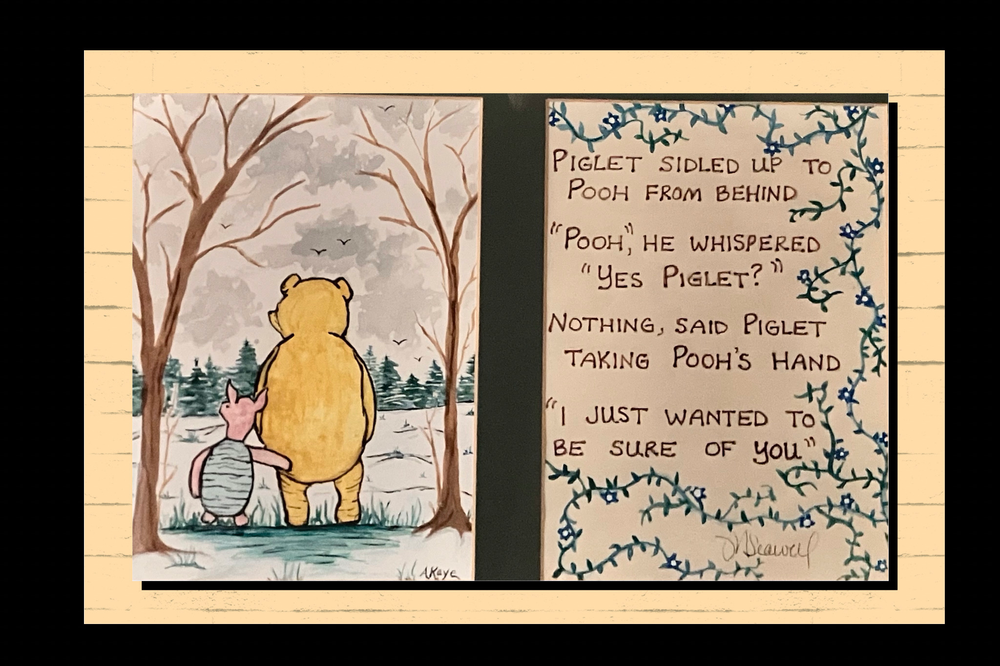
The other is of Winnie the Pooh and Piglet, two of Tim’s favorite characters, drawn by our other daughter Alisson, and also given to him as a birthday present. The drawing is accompanied by Pooh’s and Piglet’s conversation. “I just wanted to be sure of you.” Tim wept when he read it and saw his two favorite characters walking away in the picture, so close they are almost touching. It summed up how Tim felt about his journey with both our daughters and it became a model for our journey as a family. We just want to be sure of each other.


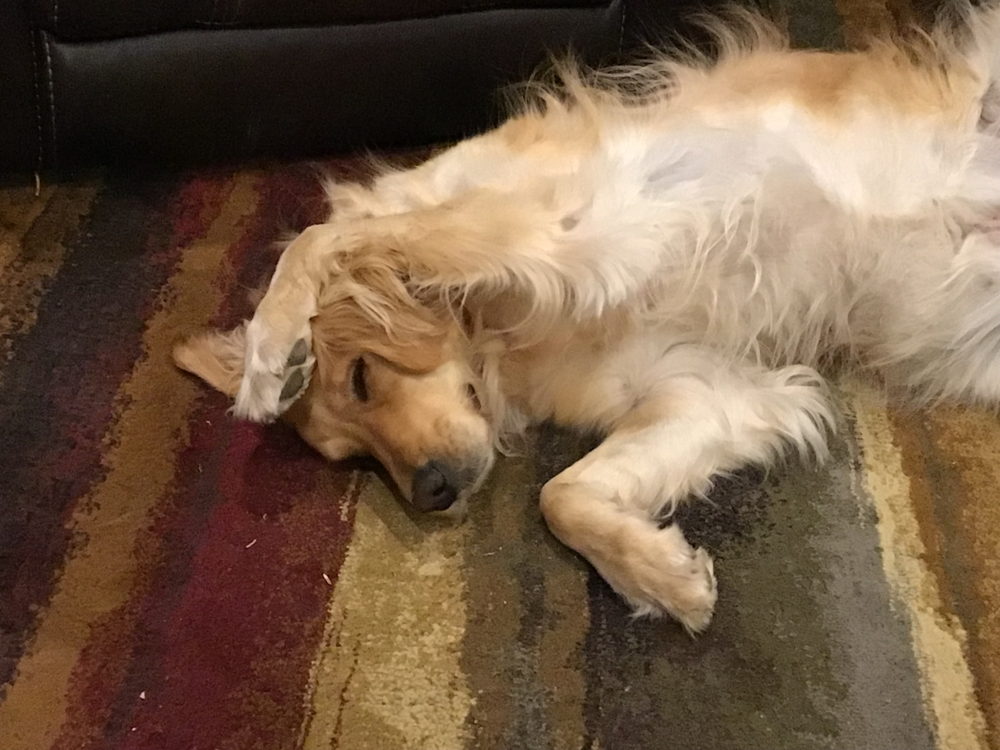
Our first year here, as we were approaching Tim’s birthday,I glanced at the drawing Melissa had done, and had this idea that The Boy who had always dreamed of owning a golden retriever deserved to have that wish fulfilled on his 70th birthday. And, through extensive research, I found a “breeder release”… a dog who at two was discovered to have mild hip dysplasia, a condition that prevented breeding for this AKC registered female. So after two years in a kennel awaiting a life of making puppies, this timid, scared of her own shadow, unsocialized Zuni became ours.


This was not a dog like the ones in the movies, running up to every human and licking them to death or snuggling up every night in bed. That doesn’t happen if you miss out on any social interaction for two years. She cowered with her tail between her legs. She had to be taught to play with a ball. And every little sound or movement or shadow in the outside world caused her to become anxious and cower. Her transformation has been slow and steady and has required the patience of saints, as with us all.


But she is a different dog now.


This is a tail wagging, gift giving, hand licking goofball around whom our life centers. We plan our days around her needs, and we have learned the art of the sniff walk and the joy of seeing her respond with reckless abandon to life’s simple dog pleasures. Others who knew her in the beginning have remarked about the transformation they have seen in her.


But I have wondered if it is she who has been transformed or The Boy and I.


The Boy has always been emotionally reserved, but he has learned through loving this dog that a “flat affect” is not welcoming to a dog. And so I revel in observing him come through the door to be greeted by the gift of a slobbery stuffie. His newly acquired “dog voice” is expressive with excitement and joy which belies his quiet nature that served his cat years so well. Zuni has transformed his natural reticence into what could pass for boisterous love and affection.


And I have had my own transformation as well. My need to wander in nature has always been a deep part of me. But it has been hard to justify when the “to do” is always so long and time is always so pressing. But having her as part of the family allows me to “put her needs first” and constantly change my plans to accommodate a drive to the canyon to watch for deer and turkeys or simply to sit by a stream as water flows like liquid glass over stones and branches creating melodies that soak me in peace.


We think we are giving her these “gifts” of time and energy to meet her needs. But maybe she has an agenda as well.


Perhaps in her dog brain she brings gifts to Tim because she knows he needs a tangible expression of love. Perhaps she is training him how to “wag his tail” with joy and excitement when encountering someone you love. Perhaps she stares at the door in longing expectation because she knows that living as I do in a world of competing creative desires, I need to set it all down and have an adventure in the woods once in awhile to keep my perspective.


Perhaps she knows that Tim and I, like Piglet and Pooh, just need a loyal, unconditional love we can be sure of, whatever the circumstance.


She has given us that in spades. Over and over. Every day. Like her owners, she is still very much the introvert, content to lie on her back in the sun in her dog version of a sun salutation or sitting a certain distance from you on the couch, content to stare lovingly and occasionally sigh. But now she strides confidently out into the world every morning greeting the day with tumbling routines on the wet grass and exploring the world on her own terms. She leads her pack only glancing back periodically to make sure of our adoring

presence.


And when she is leashed up and on the trail, we are often asked if she is a rescue, as so many dogs here are. I used to say yes, but now I think I would answer differently. After a year of being loved so unconditionally by her, I think I would simply say,


We did not rescue her.


She rescued us.


Thinking about… 


In the trauma of war, soldiers cannot avoid deep emotional and physical scars that come with being on the battlefield.  The physical injuries can be treated and hopefully rehabilitated, but the wounds of the soul often are left to fester unexamined and unresolved.


And so soldiers come home, and many become walking time bombs in their own families with no way to process their experiences in a culture that teaches seeking help is a sign of weakness, especially in the macho culture of the military.


But lately I have been thinking about the effects of war not just on soldiers but on the civilians caught in the crossfire, especially in these days when the drums of war beat constantly around the world.  And that has caused me to reflect on my mother’s experience living in Frankfurt, Germany during World War II.


My mother was working in Czechoslovakia when war exploded in Europe. Concerned about her family, she stole a bike to return home, riding at night and hiding in ditches during the day time to avoid encountering soldiers and being captured.  She witnessed Russian soldiers hanging from trees and other horrors I will not detail here. Once, when the air raid sirens began, she raced to a bomb shelter only to find the doors had just been locked. She pounded in desperation as she looked up to see a rain of bombs coming in. Only a gatekeeper who took pity on her broke the rules to let her in.  Her stories were always told in a detached, emotionless way, as though she were reading the captions on a movie screen as the scenes rolled by.


But she survived.


I think the trauma she experienced on a daily basis in a drawn out and devastating war would have to have been so profound that it could not be processed. To this day, I believe her parenting style, or lack of it, was reflective of the survival crises she had to deal with daily, never knowing if today would be her last.


And now in our current time, as I watch the nightly news, I think about the effects of war on other ordinary citizens like her as the scenes unfold before us every day of nations engaged in war.


I think about the Ukrainian cellist who created beautiful accompaniment for several of our song recordings who posts pictures of his beloved Kiev on his Instagram account.  Pictures of bombed buildings and piles of rubble from the window of his apartment appear in his feed.  There seems to be little left of the city he loves.  I picture him composing as the bombs fall and the cries of friends and neighbors fill the air, and I wonder about the wounds in his soul as he seeks solace in his music.


I think about the ordinary citizens caught in the crossfire in Palestine as the death toll continues to mount with no end in sight.  An entire race of people is disappearing before our eyes, innocent men, women, and children, whose lives have no meaning to politicians hungry for power and revenge.


I think about how years ago, Tim and I visited the city of Bayeaux, so he could pay his respects to the men and women who died on D Day liberating the people of France.  Black and white photos of that “freedom day” filled many of the restaurants, and we were told of the continuing gratitude of the people of Normandy for our nation’s sacrifices to help people we didn’t even know.


Americans were revered there for their selfless dedication to the cause of freedom and democracy.


This morning as I watched the news, I  wondered what thoughts would be passed down about us by Ukrainians in the future? Will they tell tales of our sacrifices to help them remain a democratic state?   Or will they remember how American representatives chose support of a tyrannical Russian dictator whose goal was the total subjugation of a once free people.


And I wondered what thoughts would be passed down about us by Palestinians in the future, if a Palestine still exists?  Will they remember that we sacrificed to guarantee them their own land and a chance at prosperity and safety? Or will they remember how we refused to acknowledge the genocide that was unmistakeable and turned a blind eye and a deaf ear to their suffering?


Every ordinary citizen caught up in these wars, through no fault of their own, is giving birth to generational trauma. Their wounds will deepen and fester under rough scabs forged in the fires of hatred and violence. And in some distant future, those scabs will bleed, and I fear these victims will not be posting memories of our compassion and sacrifice as a nation.


They will speak only of our cowardice.


Walking backwards 


Before sunrise, the sky, in a designated dark sky area, is mostly unblemished by human light sources.  The light grey of the sidewalks are only timidly visible next to the black asphalt of the streets, and even the most confident of walkers all wear some kind of bright illumination and reflective gear.


It is a small group that manages these walking treks before the dawn, all of us ever wary of desert creatures with whom we share these streets.  We know each other only by our silhouettes as we weave in and out of our empty streets, ever watchful for the sleeping rattlesnake curled on the road or the passing shadow of a coyote or bobcat on their way home to the desert.


And so it was one morning awhile back when I left the dim light of our recessed porch.  The crescent moon cast a meager glow on the sidewalk, so my neck lights were on high beam pointed directly at the path in front of me. But their light was so bright, I felt like I was trapped in an all night convenience store, and so I covered the dual lights with my hands so I could stop and gaze at the unencumbered night sky and catch clear sight of the planets and stars.  As my eyes adjusted to the darkness, a sense of awe enveloped me and caused me to hold my breath, so beautiful was the silence of the stars unwavering in their dedication to illuminate the dark sky.


Uncomfortable with walking on in the near total darkness, I removed my hands from the beams of the neck light and started walking again.  As my eyes adjusted to the sudden light, in the distance I began to make out a shadow of a small rounded back walking in the dark ahead of me in the middle of the road with no illumination. I slowed my pace so as not to overcome the walker and rudely surprise them by my presence.


The problem was, no matter how I slowed my pace, the rounded back of the walker did not move away from me. . It was coming closer.


My brain went into a tailspin.  How could the back of a human form be walking towards me? That defied the laws of physics.  For a moment, I became disoriented and confused.  That back continued to come closer  towards me, and as the space narrowed and my heartbeat quickened, I began to wonder if being alone in the dark was a safe choice.


A few yards later,  the rounded back of the shadow was almost next to me, and I realized it was a person walking backward who could not have seen me, so I coughed and said good morning, still a little fearful and uncertain. A lilting women’s voice answered me, and she turned in my direction and stopped. I could not help but inquire why she would be walking backward in the dark, as it seemed a very dangerous activity.


It helps me with my balance.  I started practicing at home in my house, and as I got better, I started doing it outside. Now I can walk long distances.


We stood in the dark and exchanged pleasantries as neighbors often do here, and then recounted a few more life details before we said our goodbyes and she disappeared, walking backwards, into the dark. You should try it, she called out to me, and she laughed as she continued on her way. As I restarted my walk, I contemplated her sanity, or lack there of, as I watched the first hint of sunrise.  And then it dawned on me.


Maybe she was on to something.


Most of us, I think, go through life armed to the teeth with every form of self-made light.  We think, perhaps if we cover ourselves with enough headlamps and blinking leg lights we will be able to see what lies ahead and be prepared for it. We think we have all the time in the world and that our future is guaranteed.But the reality is that life is a roadmap cluttered with unexpected detours, road closures, and rough surfaces, and it does not come with a set of directions.


No matter what we tell ourselves aren’t we really all making it up as we go, as though tomorrow is certain?  I know I am.  And I am fully loaded with my safety lights and my well made plans holding on to the illusion that I somehow can not only control the future, but that I have some idea of what it holds.


But perhaps if instead I expected that everything is a mystery and no future is guaranteed,  I would be less traumatized when blindsided by the unexpected. Perhaps, if I let go of my own ineffective light, I would stop cursing the inevitable darkness.


And perhaps, if I started practicing walking backwards in the dark,

I could simply embrace the “what is now”

with a well practiced faith in the road I cannot see.


Who I should have been 


I should have behaved more and followed the rules better and not worn those mini skirts and knee high go-go boots as a teenager, because, you know, it’s dangerous. I should have listened more in 9th grade challenge English class and not focused on the girl with ripped fishnet stockings where the white flesh poked out, because, you know, she was dangerous.


And I should have learned to stop whistling because whistling girls and crowing hens always come to some bad end.  And that’s dangerous. You know it’s true.  It’s true because my mother always said it to me.  And it’s true because sixty years later, a strange  lady at a dinner table said it to me in German when I started whistling.


I should have run away at the first sign of danger.  Which may have been when I took my first breath.  I should have sought out my real dad, because the one I had could not have been my own. I should have stayed with the neighbors in Yokohama who took me in, and fawned over my blond pigtails, and made me feel wanted.  I should have slept on their tatami mat covered floors and watched the rice paper walls retreat and advance while quiet, kind strangers told me I was beautiful in their unfamiliar lilting tongue.


I should have been something wild and dangerous…really dangerous


I should have joined the circus and run away from my life.  I should have been a high wire trapeze artist in a sparkly red, skintight body suit and flesh colored tights flying through the air with no net while sharp trumpets blared from the orchestra.  I should have sneaked under the flaps of the animal tent by day and trained in secret with the lion tamer and then slipped into the elephant car on the train at night to wrap myself in hay and a wrinkly gray trunk.


I should have been an engineer on a train….a reckless engineer, an engineer who didn’t follow the rules. I would have blown the whistle not at the crossings where I was supposed to, but at every child at play by the side of the tracks and then at the geese in flight.  I would have slowed down and stopped at every field of dandelions and then sped up through towns, exceeding the speed limit to get through the congestion and leaving the waiting passengers staring incredulously at my disappearing caboose.


I should have placed my hands over my ears and hummed loudly off key when the world whispered of my worthlessness and taunted me with accusations of my myriad imperfections.   I should have fought back instead of shapeshifting into a bystander who stood on the sidelines of my own life and let men take control of what was truly only mine to give.


I should have given up. Over and over again.


But I didn’t.


And I hope you never do either.


Women are dangerous 


Throughout my life, I have struggled internally in the company of women.  I have known beautifully spirited women who were kind to me and dear to me in every way possible, but I have spent most of my seven decades waiting for the shoe to drop in pretty much every relationship.  The hidden agenda that will get revealed. The constant occupation of mistrust in every conversation.  The determined inner dialogue that promises rejection.


Part of that probably stems from messages I received in my home which were reinforced by the society around me. In our home, first and foremost, the job of a female was to serve the males in the family. My earliest memory was when one of my three brothers wanted another helping at dinner.  I believe when he turned towards me, I said he could get it himself.  My mother’s reply was swift and forceful.


As long as there is a woman in this house, he doesn’t have to.


As I grew older, I learned from my mother’s comments that not only were  men to be served but also that women were dangerous.  They were not to be trusted. They were manipulative. She made fun of them behind their backs, and she continued her pronouncements about the expected roles of men and women throughout my childhood.


In this perfect storm, I avoided female relationships and focused on serving men,  becoming. one of the now 81% of women who, in this current time,  have experienced sexual trauma. Repeatedly. And the sad thing is, with my skewed idea of what a woman’s true character was, I hid myself from the very tribe who could have been the one to aid in my healing and help me find my voice.


All of that is changing now in this desert wilderness.


Moving here, I gave away my former selves defined by my occupation and my upbringing like the clothing and possessions that went into the boxes to Goodwill.  I made an intentional decision to show up unadorned by previous expectations or cultural indoctrination.


I wanted to give just being myself a shot.


Somewhere in this journey, I ended up in a group of powerful, centered, compassionate, women writers.  On my first day in the group, I remember how deeply I felt all the old voices invading my spirit.  I was on edge, certain if I came with the “real me,” I would face rejection. I even tried quitting once, to no avail. The lure of their creativity and authenticity was too strong. So I kept those voices at bay and breathed deeply through that first class and the ones to come, determined to not succumb to presenting a false self in order to stay safe.


In the process of letting go of that old self, I found a tribe.  These writers, these women, these warriors, literally steal my breath when I hear their words, and I weep in gratitude at their presence in my life.  Ripped from the lies of my childhood, I embrace their femaleness, their raw courage, their strength in adversity and their innate capacity to hold a heart as gently as a newborn.  And over these many months, I have discovered something that has reshaped my thinking.


Women are dangerous., but not in the way my mother taught me.


We are dangerous when we find our voices and feast on ideas grown in metaphor and nurtured in soft light. We are dangerous when we help each other navigate the hazards of our own wilderness, taking special care to point out the hidden snares.


.And we are dangerous when we stand huddled together, tightly circled around the campfires of our shared healing Light.


Sister Wild Horse

By Jules Donnelly, Artist/Writer


Looks like change is swirling around us. 

I am all at sea and i don't know how to row. 

I will bring wooden spoons and you can bring a boat 

withthefullmoontiedtotheback. 

We would drift on liquid glass and count the shooting stars. 

We would pick ripe words from the overhanging branches and 

piece them together to make sentences brimming with honey and jalapeños. 

Then returning to land as all wild horses must.


Remembering. 


We are more than warriors. 

More than the 

grocery list

of surgeries 

between us. 


More than the axe chops we've taken.


We are more than what they said we'd be.

Gone farther than what they said we could. 

Beamed brighter than most imagined. So.

I feel the need to be clear. I should be perfectly clear.  

My Stepfather says I have a big mouth. 

I say my mouth has found its words.

I say i am brave. We are brave enough. 

We are not through. We are not finished. We are brave enough to live each day.

With all we've got. For as long as we've got.


We can be gloriously quiet or courageously loud. 

Either way is great.

I'm here to tell you that everything is perfectly fine. However, 

I cheated. Only peeked really.

But I saw them there. And that's the perfect part.

Written there in the Book of Life

breathed by God.

Our names are written there. Us.

Sisters Wild Horse.

Wild forever.


 - Written for my friend M.L. Wild forever!

Something about a hymn 


Having had no experience with church until my mid forties, the idea of singing hymns together in community was foreign to me.   But I loved arranged music in general and joined the church choir just to experience the feeling again of being in a group making music. Shortly after joining choir, we began a “blended service”and, assigned responsibility of leading a team, I set about trying to find hymns that could be adapted to guitar and drums to add to newer worship music which I had grown to love.


To help you visualize how long ago this was, there were no hanging screens on which to project the words..   In fact, our first screen was cobbled together with Home Depot insulation boards and a few coat hangers, barely one step above a sheet hanging from a wire. There was also no way to connect the song lyrics on the computer to enable projection on our “screen.” Without the electronics of today, a person was assigned the “job” of flipping the overheads as the song progressed, a job which was much harder to do correctly than it sounds.


The production of those overheads was my job. All of the words had to be typed by hand and printed on overhead transparencies for one person to switch out as they sat at an overhead projector in front of the room.  Because I loved “technology” and chose the music each week, it was my job to type the lyric sheets.


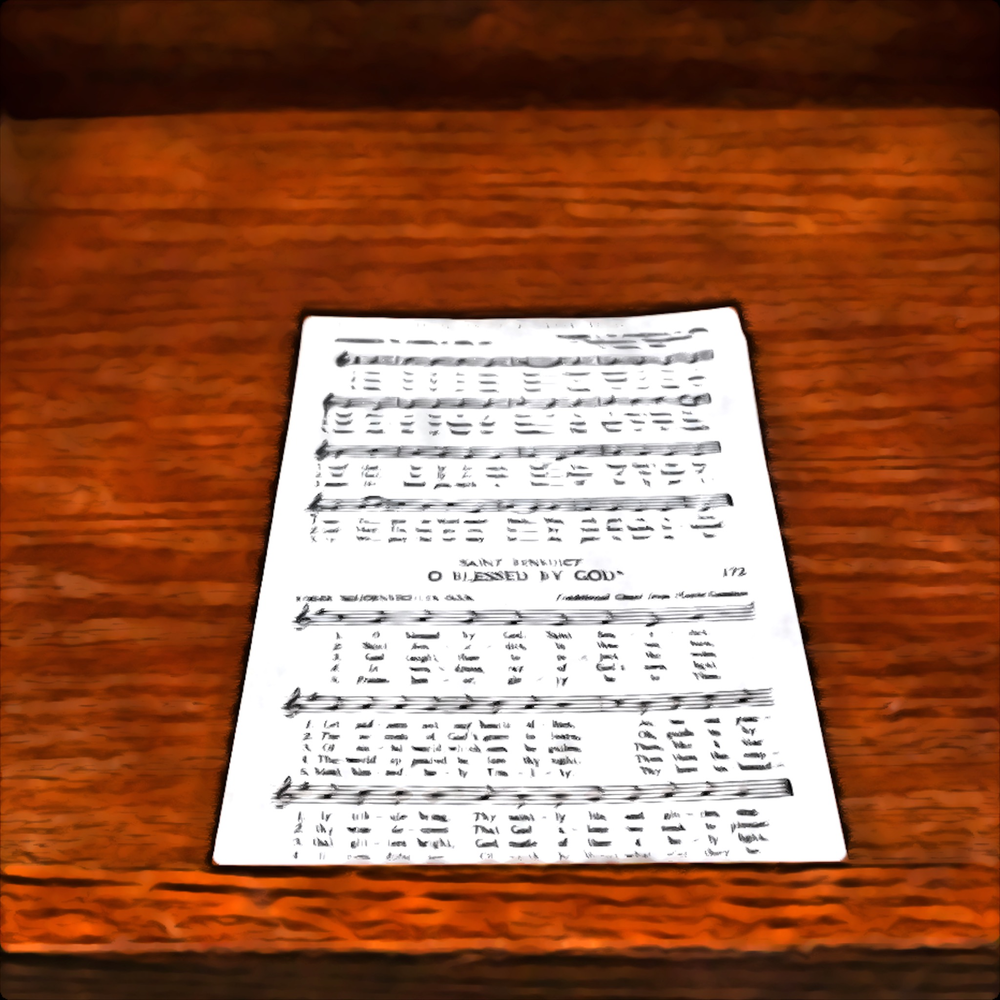
The church hymnal was thick with choices, so I would look for themes and then pluck out the notes of hymns, and finally, after choosing one, I would type the words. Almost none were familiar to me, so I became a student of the words.  But here’s the thing. I am a two finger typist.  So in order to type the hymns, I had to semi-memorize each line and understand it before I could type it.


From the first hymn I started typing, an unexpected thing would happen.  I would get a few lines in and begin to weep.  It was like I was typing the words on to my very heart and their imprint was deep and became almost immediately permanent. The words would invade my spirit, and I would sing them as I typed, feeling this sweet release and comfort as I did. I would even find myself bursting into song in everyday situations, treasuring each word, each turn of phrase, each truth revealed.


Those words would become real to me in the midst of a spiritual crisis only a few years later.


Our church entered into a time of deep turmoil.  Decent leaders were being sabotaged and reputations were being destroyed.  At a small retreat center on an island off the coast of Washington, a small group met with someone skilled in trauma in churches to help work our way through.  One of the difficult conversations sent me over the edge, and I fled alone to weep for the unnecessary destruction of people dear to me.


I sat alone on a rocky beach in the thick mist of morning, the waves lapping quietly at the shore.  In utter despair, thoughts of ending my life gnawed at the edges of my soul. This was my first faith community. I loved them. But darkness had overcome good, and my world was shaken. With no journal to write in to try and find clarity, I opened to the empty pages in the back of my Bible and wept so deeply I thought my heart would burst.  I simply could not handle this life anymore. I truly felt like I wanted to die.


A loud explosion of sound from the gulls overhead drew my gaze abruptly up and towards the sea. I stared at the seemingly infinite, measureless expanse of water shrouded in fog and imagined how many drops it contained.   As I sat being drenched in the soft mist, I thought about the droplets that were falling to the earth in the light fog.  I wondered how many drops there were and imagined counting them as a way to still my reckless thoughts and calm my spirit. While contemplating the number, a new thought suddenly entered in, crowding out the voices of destruction and despair in my head.


Even should I be able to count them all, the number would pale by comparison to God’s love for me.  


As the mist soaked my skin, that promise seeped into my soul, and the words of a hymn flooded over me as though the sea itself sang.


Could we with ink the ocean fill,

and were the skies of parchment made;

were ev’ry stalk on earth a quill,

and ev’ryone a scribe by trade;

to write the love of God above

would drain the ocean dry;

nor could the scroll contain the whole,

though stretched from sky to sky.


Tears of consolation flooded over me and washed away my tears of despair.  That ragged day, when my woundedness seemed beyond healing, the True Balm of Gilead came to sing words of boundless love and of abundant life over me in the midst of turmoil. I glanced at the pages of my Bible, now wrinkling under the mist’s moisture and wrote these words that remain to this day.


I know longer know where I end and You begin.


I have known many a dark dawn in the decades since Love sang over me with words from the sea.  But the memory of the gift of consolation from the inspired words of a hymn that day has remained, sustaining and strengthening me daily.


O love of God, how rich and pure!

How measureless and strong!

It shall forevermore endure—

the saints’ and angels’ song.


Change of vision… 

One thing you need to know is that I really don’t scare very easily.  Being a road musician with a bit of a biker following taught me that.  I have had knives pulled on me simply for saying hello.  I have watched grown men set their shirts on fire while listening to our band play “Old Flame” by Alabama.  And never a proponent of violence to solve problems, I once tried to prevent a biker in an alley from beating up a cowboy while we were packing out equipment.


His girlfriend, who was apparently the jealous type, grabbed me by my labels and threw me up against a brick wall, noting another try at peaceful resolution would result in my own beating. But the next night, they all showed up at the gig with an official club hat and pin, and in a touching little ceremony, announced my honorary membership because I was, to quote the source, “a woman with balls.”


So you can imagine, with this experiential skill set, there was little about working with middle school students that was intimidating to me when I became a teacher. In fact, over the years, unusual personalities were often deliberately placed in my classes because I was “good with those kinds of kids.”  And perhaps I was.  At least until a transfer student came into my classroom in the middle of the year and filled me and my classroom with fear.


This young man entered in all black, a trench coat, a permanent sneer, and a defiant personality. In his first day, he mumbled incoherently, refused to answer questions, glared at everyone in the room, and spent much of his time trying to pop pimples on his face, directing the contents around the room.  And he let me know that he had absolutely no respect for me, which I sensed was something to do with my gender.  And it went on day after day.


I did something I had never done in my career.  I asked to have him removed from my class.


Of course, I had good reasons, right? I explained to the counselor that if anyone was ever going to bring a rifle into a school, this would be the person.  I reasoned that perhaps a male teacher would get a different response.  I tried everything I could think of, but her response was always the same.


But you are so good with these kinds of kids.


I am ashamed to admit that after my last failed attempt to get him removed, I walked down the empty hallway after school and in my frustration, I cried out to God Why? Why? Why?  I complained that the whole community spirit I had worked on so hard was being destroyed.  I worried all of our safety was at stake. And I begged God to do something that would get this student removed from my class.


As soon as that prayer was lifted, it was like the world took a breath.  Everything around me became still, and then I heard an audible voice of calm strength and certainty.


Who do you think put him there?


That stood me up. I had never considered that he was there for a reason, and I realized any change in this young man’s environment had to begin in me.  I decided from that moment on, I would imagine that Jesus had come to take up residence in this young man, and I would treat him accordingly. Literally, the first thing everyday when this student appeared, I would look into his face and welcome him as though Jesus himself had entered the room.


And a funny thing happened.  When I started receiving this young man in love and not fear, his classmates began to do the same thing.  It felt like that room started to become blanketed in love.  Weird and strange things still happened, but our response completely changed as a community.  He became accepted.


One day a few months later, my radio broke.  It mattered because I played classical music for the class when we wrote.  This young man came up to my desk and quietly said, “Seawell, I can fix that for you.”  And he did, almost completely dismantling it first.  When he was done and music poured out, I seem to recall the class cheering him on.  He became “the guy who fixes things.”


And not the guy we feared.


Living now as we are in a world so willing to demonize “the other,” I have found myself thinking about this young man.  I wonder if it wouldn’t change all of our hearts just a little if we could look at someone who is different and not react in fear.  I wonder if simply saying, Jesus, I see You there, might give us all the opportunity to embrace the sacred business of loving extravagantly as though each person we meet is Jesus himself.


Because in reality, they are.


And it took an adolescent and a change in vision to teach me that.


Tears in the Tetons 

Our home was not a center of hospitality as a child.  I remember no shared dinner tables, no regular activities with friends, no social interaction with neighbors..   However, I do  recall a few non related people who seemed to appear for a few nights, mostly because it was so rare. There was the visit from Sumiko, who had worked with my dad when our family lived in Japan, and a Franciscan Friar with a kind spirit who appeared in a dark robe and white clerical collar. To this day, I have no idea what his relationship was to our  normally socially isolated, spiritually devoid family.


And then there was Margaret Altmann.


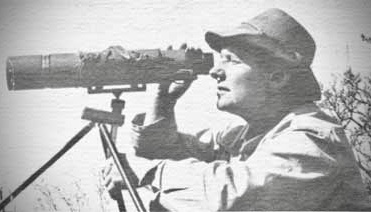
Margaret was legendary in our family, the way that some families have an elder in their matriarchal lineage who is revered.  Born in Berlin, she had three strikes against her as the Nazi Party rose to power.  She was highly educated, she was Jewish, and she was gay.  My mom told us that Margaret saw the handwriting on the wall, so she immigrated to America and began an illustrious career that would include earning a second doctorate from Cornell and eventually becoming the leading authority on moose and elk in the United States.


But it was not moose and elk that first brought her to my mom’s attention. It was a miniature Schnauzer puppy.   


My mom had also emigrated from Germany and was raising her four children in Virginia near the Hampton Institute where Margaret first worked. .  After purchasing a puppy from Margaret’s latest litter, they became fast friends, and Margaret took my mother under her wing, even forgoing her scholarly duties once when the whole family became very sick while my father was deployed overseas.  Mom shared how Professor Margaret lovingly cleaned up the home and cooked for everyone and tended to us children so my mom could get some much needed rest.  Mom never forgot that kindness.


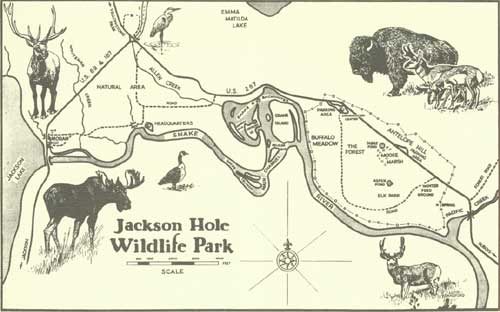
They became fast friends for life, and when my dad was killed by a drunk driver the spring of my junior year, my mom decided to take me and my brother, who was a sophomore, to stay with Margaret at her cabin in  the Buffalo Valley overlooking The Grand Tetons.  Perhaps she thought that visit would take all of our minds off the tragedy that had blown up our lives.


She was right.


My brother and I listened to animals prowling the dark in the only night we dared sleep in a tent in a meadow behind the cabin.  We watched thunderstorms light up the Tetons as they raced into the valley.  We listened to the crackle of the wood stove in the one bedroom cabin where Margaret stayed each summer doing research.  We rode her horses into the hgh meadows, and she taught us how to be invisible to an elk.  And, for that one week, we rested from the trauma, our hearts too filled with the mystery and majesty of the Tetons to entertain thoughts of sorrow.


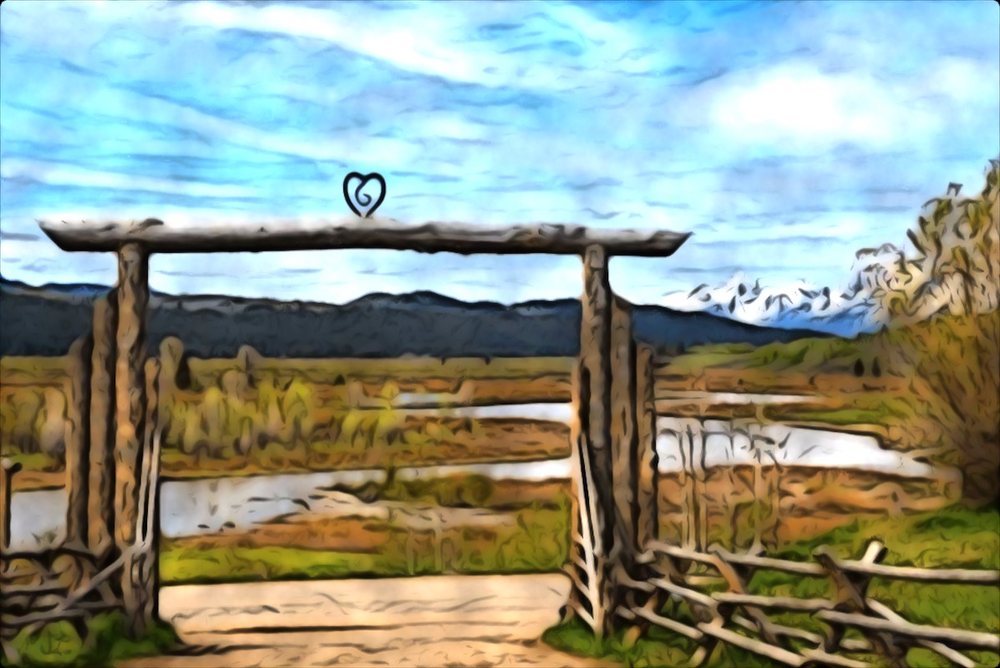
Fifty years after that experience, with my husband in tow, I drove the backroads of the Buffalo Valley in search of that cabin.  As we meandered up the first road, I saw where I had jogged the first morning and encountered fresh bear prints in the mud.  I saw the Buffalo River Bridge, where years later my mom and I and my twin daughters “fished” and feared passing bears.  But I could not find the cabin, and so we went further down the road to try and find the dude ranch where Margaret had taken us to meet her friends during that first visit.


It was still there.


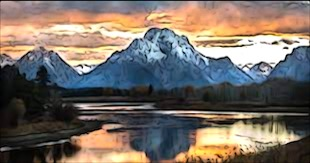
Tim went inside to the small restaurant as I parked the car.  I stepped out and glanced across the valley.  The view had not changed.  In the distance, the Tetons loomed like sentinels over the valley profiled against a sky darkened by an impending summer storm.   The Buffalo River wound through the landscape, and the inescapable smell of pine was trapped in the breeze.


And then it hit me.


I had come to know these mountains as a teenager, bereft and struggling to find a language for my complex sorrow.  The father who had abused me but had also infused me with a love of literature and music was gone.  Forever.  There would be no reconciliation in this life.  But I could not let myself process that sorrow then because once my father had died, I received a lifelong job assignment..


I had to take care of my mom.


Over four decades later that job came to an end with the death of my mom at 95. And now I stood there overlooking the valley as the hint of a storm brewed, and a spasm gripped my heart. For all these long years, my seventeen year old self had never fully processed that unexamined sorrow. For all these long years, the Buffalo River had flowed through this valley waiting for my return. For all these long years, the Tetons had loomed in the distance, holding my tears, waiting to release them to me.


I cried them now, helpless against the flood.


I was free to grieve.


Though I have always considered these Tetons my spiritual home, I have not been back since that last day in the Buffalo Valley.  Those mountains graciously held my sorrow all those decades, and in some ways, it feels like we have both gone our separate ways, no longer burdened.


But the Creator who painted their grandeur against a rugged sky still calls me daily to rest in untamed spaces,  no longer in sorrow, but in overwhelming gratitude for the endless healing capacity of wild, beautiful places.